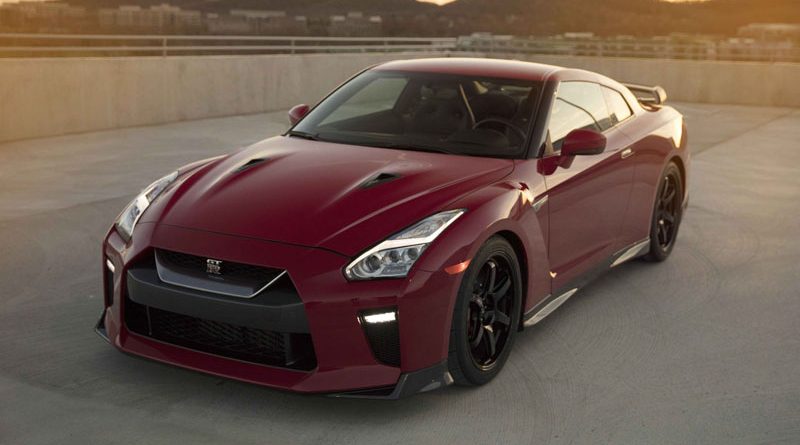
What To Do This Weekend: Eibach Meet 2013 SUNDAY! SUNDAY! SUNDAY!

Posted on 05.17.13 | Andrew Beckford No Comments

This weekend is hands down the biggest weekend for all men and women who consider themselves certified “Honda heads”!  The Eibach meet is one of the biggest car meets in the country and THE biggest Honda meet ever in history to ever happen in any place at any time.  OK, maybe that last part is an exaggeration but still!  In fact the Eibach meet is so big, that they can’t even hold the event at Eibach anymore. 

This year the famous meet will be held in the massive parking lot at Storm Stadium in Lake Elsinore, CA.  Sure it is a little bit farther out than Eibach’s facility but the extra space will allow more room for all the epic Honda-ness.  Enough talk!  I shall provide you with the details and you shall make plans for your exodus!

Who: Eibach and Honda fans everywhere

What: Eibach meet 2013

When: Sunday May 19th 2013 11am-4pm

Where: Storm Stadium 500 Diamond Drive. Lake Elsinore, CA 92530

Why: Because VTEC Just Kicked In Yo’!

How Much: $5 admission, $10 parking

Tags: · , , , , , , , , ,

Hype: Porsche 918 Spyder’s Production Version Revealed (Gallery)

Posted on 05.16.13 | Andrew Beckford No Comments

It feels like forever-ago when the world first learned of the Porsche 918 Spyder.  It went from avant garde concept to technological boon and today it finally reaches its “production” stage as seen in a fleet of new pictures.  Besides all these new shots of the production 918, Porsche has also released a mountain of information about final product once its released. 

Everything you could ever want to know (except the price and release date) about the 918 is in an epic press release below.  However, if you don’t want to spend the better half of your lunch break reading through it, I’ll give you the quick cliff notes:

-The 918 will have a 4.6 liter gasoline V8 which makes 608HP and redlines at just over 9,100 rpm. 

-In addition to the V8  there are two electric motors: one on the front axel and one on the rear.

-Technically the 918 is a “plug-in” hybrid.

-There are five “modes” for different driving conditions including an “E-power” mode which runs solely off the  electric motor(s).

-The 918 utilizes a 7-speed Porsche PDK transmission.

-The 918 will weigh 3,715lbs.  With the “Weissach package” the weight is 3,616lbs.

-Everything you want to be made out of carbon fiber, is made out of carbon fiber.

Ok, now that you have the gist I will get you started with a few HD resolution pictures (click the thumbnails).  For the full gallery just hit the red text for our Facebook page.  Otherwise, if you really want to geek out on the details scroll below the thumbnails for the official press release.


Press Release:

Atlanta.The 918 Spyder embodies the essence of the Porsche idea: it combines pedigree motor racing technology with excellent everyday utility, and maximum performance with minimum consumption. The task faced by the development team was to create the super sports car for the next decade with a highly efficient and powerful hybrid drive. Developing the car from scratch, appropriately beginning with a sheet of white paper, allowed the team to come up with a no-compromise concept. The entire car was designed around the hybrid drive. The 918 Spyder therefore demonstrates the potential of the hybrid drive to a degree never seen before: the parallel improvement of both efficiency and performance without one being at the cost of the other. This is the idea that has made the Porsche 911 the most successful sports car in the world for 50 years. In short, the 918 Spyder will act as the gene pool for the Porsche sports cars of the future.

The 918 Spyder reveals its close links to motorsport in a variety of ways. It has been designed, developed and produced by Porsche engineers who build race cars, in cooperation with series production specialists. A great deal of insight gained from the development of Porsche race cars for the 24 hours race in Le Mans in 2014 is thus integrated into the 918 Spyder – and vice versa. The structural concept of the 918 Spyder with a rolling chassis as its basis – a basic vehicle that can be driven even without a body – is race car tradition at Porsche. The concept of the V8 engine originates from the LMP2 RS Spyder race car. The load-bearing structures, the monocoque and subframe, are made of carbon fiber reinforced polymer. Porsche has many years of experience with this high-strength, lightweight construction material and has again achieved top results with the development of the series production 918 Spyder. Many parts of the super sports car come from manufacturers who have a proven record as suppliers for motorsport vehicles.

Hybrid drive brings advantages in terms of driving dynamics

A key message of the 918 Spyder is that the hybrid drive from Porsche is a plus for no-compromise driving dynamics. Drivers can experience this thanks to the unique all-wheel drive concept with a combination of combustion engine and electric motor on the rear axle and the second electric motor on the front axle. It is based on knowledge gained by Porsche during motor races with the successful 911 GT3 R Hybrid. Due to the additional, individually controllable front drive, new driving strategies for extremely high, safe cornering speeds can be implemented, especially for bends. Furthermore, the advanced “boost” strategy manages the energy of the electric drive so intelligently that, for every sprint with maximum acceleration, the full power of the 918 Spyder can be tapped into by simply pressing the accelerator down fully. In short, the 918 Spyder allows even drivers without motorsport training to experience the potential of advanced longitudinal and transverse dynamics.

The Porsche 918 Spyder also has the potential to break many records. The current lap time for the North Loop of the Nürburgring is 7:14 minutes. This time was achieved in the presence of international journalists during test drives in September 2012 – more than a year before start of production. The 918 Spyder prototype was therefore approximately 20 seconds quicker than the Porsche Carrera GT. More test drives on the Nürburgring North Loop will follow. An even more important factor is that the 918 Spyder surpasses previous models and competitors by far in its efficiency as well. As a plug-in hybrid vehicle, it systematically combines the dynamic performance of a racing machine with low fuel consumption. To sum it up: maximum driving fun with minimal fuel consumption.

Carbon monocoque guarantees lightweight design with a low center of gravity

The 918 Spyder utilizes the best state-of-the-art technologies, taken straight from motor racing, to achieve its top performance. The entire load-bearing structure is made of carbon fiber reinforced polymer (CFRP) for extreme torsional rigidity. Additional crash elements at the front and rear absorb and reduce the energy of a collision. The car’s unladen weight of approximately 3,715 lbs. (3,616 lbs. with “Weissach” package), an excellent low weight for a hybrid vehicle of this performance class, is largely attributable to this concept.

The drivetrain components and all components weighing over 110 lbs. are located as low and as centrally as possible within the vehicle. This results in a slightly rear end biased axle load distribution of 57 percent on the rear axle and 43 percent on the front axle, combined with an extremely low center of gravity at approximately the height of the wheel hubs, which is ideal for driving dynamics. The central and low position of the traction battery directly behind the driver not only supports efforts to concentrate masses and lower the center of gravity; it also provides the best temperature conditions for optimum battery power capacity.

Chassis with race car genes and rear-axle steering

The multi-link chassis of the Porsche 918 Spyder is inspired by motorsport design, complemented by additional systems such as the PASM adaptive shock-absorber system and rear-axle steering. Basically, this incorporates an electro-mechanical adjustment system at each rear wheel. The adjustment is speed-sensitive and executes steering angles of up to three degrees in each direction. The rear axle can therefore be steered in the same direction as the front wheels or in opposition to them. At low speeds, the system steers the rear wheels in a direction opposite to that of the front wheels. This makes cornering even more direct, faster and more precise, and it reduces the turning circle. At higher speeds, the system steers the rear wheels in the same direction as the front wheels. This significantly improves the stability of the rear end when changing lanes quickly. The result is very secure and stable handling.

Porsche Active Aerodynamic (PAA) for different driving modes

Porsche Active Aerodynamic (PAA), a system of adjustable aerodynamic elements, ensures unique and variable aerodynamics; its layout is automatically varied over three modes ranging from optimal efficiency to maximum downforce and is tuned to the operating modes of the hybrid drive system. In “Race” mode, the retractable rear wing is set to a steep angle to generate high downforce at the rear axle. The spoiler positioned between the two wing supports near the trailing edge of the airflow also extends. In addition, two adjustable air flaps are opened in the underfloor in front of the front axle, and they direct a portion of the air into the diffuser channels of the underbody structure. This also produces a “ground effect” at the front axle.

In “Sport” mode, the aerodynamic control system reduces the attack angle of the rear wing somewhat, which enables a higher top speed. The spoiler remains extended. The aerodynamic flaps in the underfloor area close, which also reduces aerodynamic drag and increases attainable vehicle speeds. In “E” mode, the control is configured entirely for low aerodynamic drag; the rear wing and spoiler are retracted and the underfloor flaps are closed.

Adjustable air inlets under the main headlights round off the adaptive aerodynamic system. When the vehicle is stationary and in “Race” and “Sport” mode, they are opened for maximum cooling air intake. In “E-Power” and “Hybrid” modes, they close immediately after the car is driven off in order to keep aerodynamic drag to a minimum. They are not opened until the car reaches speeds of approximately 81 mph or when cooling requirements are higher.

From comfortable to race-ready: five modes for three motors

The core of the 918 Spyder concept is its distribution of propulsive power among the three power units; their cooperation is controlled by an intelligent management system. To best exploit these different approaches, the Porsche developers defined five operating modes that can be activated via a “map switch” on the steering wheel, just like in motorsport cars. On the basis of this pre-selection, the 918 Spyder applies the most suitable operating and boost strategy without driver intervention, thus allowing the driver to concentrate fully on the road.

Quiet and elegant: “E-Power”

When the vehicle is started up, the “E-Power” mode is the default operating mode as long as the battery is sufficiently charged. In ideal conditions, the 918 Spyder can cover approximately 18 miles on purely electric power. Even in pure electric mode, the 918 Spyder accelerates from 0 to 62 mph in seven seconds and can reach speeds of up to 93 mph. In this mode, the combustion engine is only used when needed. If the battery’s charge state drops below a set minimum value, the vehicle automatically switches to hybrid mode.

Efficient and comfortable: “Hybrid”

In “Hybrid” mode, the electric motors and combustion engine work alternately with a focus on maximum efficiency and minimum fuel consumption. The use of individual drive components is modified as a function of the current driving situation and the desired performance. The Hybrid mode is typically used for a fuel economy-oriented driving style.

Sporty and dynamic: “Sport Hybrid”

In more dynamic situations, the 918 Spyder selects the “Sport Hybrid” mode for its power sources. The combustion engine now operates continuously and provides the main propulsive force. In addition, the electric motors provide support in the form of electric boosting or when the operating point of the combustion engine can be optimized for greater efficiency. The focus of this mode is on performance and a sporty driving style at top speed.

For fast laps: “Race Hybrid”

“Race Hybrid” is the mode for maximum performance and an especially sporty driving style. The combustion engine is chiefly used under high load, and charges the battery when the driver is not utilizing its maximum output. Again, the electric motors provide additional support in the form of boosting. Furthermore, the gear-shifting program of the PDK is set up for even sportier driving. The electric motors are used up to the maximum power output limit to deliver the best possible performance for the race track. In this mode, the battery charge state is not kept constant, rather it fluctuates over the entire charge range. In contrast to Sport Hybrid mode, the electric motors run at their maximum power output limit for a short time for better boosting. This increased output is balanced by the combustion engine charging the battery more intensively. Electric power is thus available even with several very fast laps.

For pole position: “Hot Lap”

The “Hot Lap” button in the middle of the map switch releases the final reserves of the 918 Spyder and can only be activated in “Race Hybrid” mode. Similar to a qualification mode, this pushes the traction battery to its maximum power output limits for a few fast laps. This mode uses all of the available energy in the battery.

Main propulsion: the race car’s eight cylinder engine

The main source of propulsion is the 4.6-liter, eight cylinder engine that produces 608 hp of power. The engine is derived directly from the power unit of the successful RS Spyder, which explains why it can deliver engine speeds of up to 9,150 rpm. Like the race engine of the RS Spyder, the 918 Spyder power unit features dry-sump lubrication with a separate oil tank and oil extraction. To save weight, components such as the oil tank, the air filter box integrated into the subframe and the air induction are made of carbon fiber reinforced polymer. Further extensive lightweight design measures have resulted in such features as titanium connecting rods, thin-wall, low-pressure casting on the crank case and the cylinder heads, a high-strength, lightweight steel crankshaft with 180 degrees crankpin offset and the extremely thin-walled alloy steel/nickel exhaust system. Striking features of the V8 are that it no longer supports any auxiliary systems, there are no external belt drives and the engine is therefore particularly compact. Weight and performance optimizations achieve a power output per liter of approx. 133 hp/l – the highest power output per liter of a Porsche naturally aspirated engine – which is significantly higher than that of the Carrera GT (106 hp/l) and outstanding for a naturally aspirated engine.

Unique race car design heritage: top pipes

It isn’t just this engine’s performance but also the sound it makes that stokes the emotionality of the 918 Spyder. This is attributable first and foremost to the so-called top pipes: the tailpipes terminate in the upper part of the rear end immediately above the engine. No other production vehicle uses this solution. The top pipes’ greatest benefit is optimal heat removal, because the hot exhaust gases are released via the shortest possible route, and exhaust gas back pressure remains low. This design requires a new thermodynamic air channeling concept. With the HSI engine, the hot side is located inside the cylinder V, the intake channels are on the outside. There is another benefit as well: the engine compartment remains cooler. This is especially beneficial to the lithium-ion traction battery, as it provides optimum performance at temperatures between 68 and 104 degrees Fahrenheit. Consequently, less energy needs to be used for active cooling of the battery.

In parallel in the drivetrain: hybrid module

The V8 engine is coupled to the hybrid module, since the 918 Spyder is designed as a parallel hybrid like the current hybrid models from Porsche. Essentially, the hybrid module comprises a 115 kW electric motor and a decoupler that serves as the connection with the combustion engine. Because of its parallel hybrid configuration, the 918 Spyder can be powered at the rear axle either individually by the combustion engine or electric motor or via both drives jointly. As is typical for a Porsche super sports car, the power pack in the 918 Spyder has been placed in front of the rear axle, and does not have any direct mechanical connection to the front axle.

Upside-down for a low center of gravity: Doppelkupplung

A seven-speed Doppelkupplung (PDK) transmission handles power transmission to the rear axle. The high-performance transmission is the sportiest version of the successful PDK; it has undergone a complete redesign for the 918 Spyder and has been further optimized for high performance. To ensure a low mounting position for a low center of gravity of the entire vehicle, the gear unit was turned “upside down” by rotating it 180 degrees about its longitudinal axis, in contrast to other Porsche series. If no power is required on the rear axle, the two motors can be decoupled by opening the decoupler and PDK clutches. This is the action behind the Porsche hybrid drive’s typical “coasting” with the combustion engine switched off.

Independent all-wheel drive: front axle with electric motor

On the front axle, there is another independent electric motor with an output of approximately 95 kW. The front electric drive unit drives the wheels at a fixed ratio. A decoupler decouples the electric motor at high speeds to prevent the motor from over-revving. Drive torque is independently controlled for each axle. This makes for very responsive all-wheel drive functionality that offers great potential in terms of traction and driving dynamics.

Lithium-ion battery with plug-in charging system

The electric energy for the electric motors is stored by a liquid-cooled lithium-ion battery comprising 312 individual cells with an energy content of about seven kilowatt hours. The battery of the 918 Spyder has a performance-oriented design in terms of both power charging and output, so that it can fulfill the performance requirements of the electric motor. The power capacity and the operating life of the lithium-ion traction battery depend on several factors, including thermal conditions. That is why the battery of the 918 Spyder is liquid-cooled by a dedicated cooling circuit. The global warranty period for the traction battery is seven years.

To supply it with energy, Porsche developed a new system with a plug-in vehicle charge port and improved recuperation potential. This vehicle charge port in the B-pillar on the front passenger side lets users connect the storage battery to an electrical supply at home to charge it. The charge port is standardized for the country of purchase. The on-board charger is located close to the traction battery. It converts the alternating current of the household electric supply into direct current with a maximum charge output of 3.6 kW. Using the supplied Porsche Universal Charger (AC), the traction battery can be charged with a conventional wall plug in seven hours from a ten ampere rated, fused power socket a US 110 Volt household electrical supply, for example. Furthermore, the Porsche Universal Charger (AC) can be installed at home in the garage using the Charging Dock. It enables rapid and convenient charging within approximately two hours, irrespective of regional conditions. The Porsche Speed Charging Station (DC) is available as an optional extra. It can fully charge the high-voltage battery of the 918 Spyder in just 25 minutes.

Pioneering control concept: clear organization of the cockpit

The driver is the focus of all technology in the future Porsche super sports car. A cockpit was created for the driver that is typical of the brand and pioneering in its clarity. It is partitioned into two basic areas. First, there are the controls that are important for driving, which are grouped around the multifunction steering wheel, combined with driver information displayed on three large round instruments. Second, there is the infotainment block that is housed in the lifted center console, which was introduced in the Carrera GT. Control functions, e.g. for the automatic climate control system, wing adjustment, lighting and Porsche Communication Management (PCM), including a Burmester high-end sound system, can be intuitively operated by multitouch with a new type of black panel technology.

For even higher performance: the Weissach package

For very performance-oriented customers of the 918 Spyder, Porsche offers the “Weissach” package. These modified super sports cars can be recognized at first glance by special colors and designs that are based on legendary Porsche race cars. The roof, rear wings, rear-view mirrors and frames of the windscreen are made of visible carbon. Parts of the interior are upholstered with Alcantara instead of leather, and visible carbon replaces much of the aluminum. Sound insulation has been reduced. The emphasis on performance is not just visual: very lightweight magnesium wheels reduce unsprung masses; gross weight was reduced by about 77 lbs. The benefits are experienced in further improved dynamic performance. Other references from motorsport are six-point seatbelts for driver and front passenger, optional film-coating instead of body paint, as well as additional aerodynamic body parts in visible carbon.

Porsche redefined: a new super sports car for a new decade

The 918 Spyder continues a long tradition of super sports cars at Porsche; as technology platforms, as the driving force behind both car emotion and car evolution and as the ultimate sports cars of their decades: the Carrera GTS, the first Porsche Turbo, the 959, the 911 GT1, the Carrera GT. More than any of its predecessors, the 918 Spyder is providing key impetus for developing technologies for future vehicle concepts. It offers a complete package of components that reflect Porsche DNA – more concentrated than ever before.

Technical Specifications – Porsche 918 Spyder

Body: Two-seat Spyder; carbon fiber reinforced plastics (CFRP) monocoque interlocked with CFRP unit carrier; two-piece Targa roof; fixed roll-over protection system.

Drivetrain: Parallel full hybrid; 4.6-liter V8 mid-engine with dry-sump lubrication; hybrid module with electric motor and decoupler; electric motor with decoupler and gear unit on front axle; auto start/stop function; electrical system recuperation; four cooling circuits for motors, transmission and battery; thermal management.

Engine power: 608 hp at 8,600/min (V8 engine)

154 hp (hybrid module on rear axle)

127 hp (electric motor on front axle)

887 hp (combined)

Max. torque: 390 lb.-ft. at 6,600/min (V8 engine)

940 lb.-ft. (equivalent torque calculated on the crankshaft, complete system in 7th gear)

787 lb.-ft. (complete system, 3rd gear)

> 590 lb.-ft. (800/min – 5,000/min)

Maximum Revs: 9,150 rpm

Power output per l: 133 hp/l (V8 engine)

Power transmission: Combustion engine with hybrid module and transmission bolted together to form a single drive unit; seven-speed Doppelkupplungsgetriebe (PDK); rear-wheel drive; front electric motor with gearbox for driving the front wheels (decoupled from 146 mph); five pre-selectable operating modes for optimum coordination of all drive units.

Gear ratios PDK

1st gear 3.91

2nd gear 2.29

3rd gear 1.58

4th gear 1.19

5th gear 0.97

6th gear 0.83

7th gear 0.67

R gear 3.55

Final drive ratio 3.09

Clutch diameter 8.7 in. / 6.5 in.

Chassis and Suspension: Double-wishbone front axle; optional electro-pneumatic lift system on front axle; electro-mechanical power steering; multilink rear axle with adaptive electro-mechanical system for individual rear wheel steering; electronically controlled twin-tube gas-pressure dampers in the front and rear with Porsche Active Suspension Management (PASM).

Brake system: High-performance hybrid brake system with adaptive recuperation; internally ventilated and perforated front ceramic brake discs (PCCB), 16 in. in diameter and 1.4 in. thick; rear discs 15.4 in diameter and 1.3 in. thick.

Wheels and tires: 918 Spyder wheels

(Weissach package: 918 Spyder magnesium wheels)

front 9.5 J x 20 with 265/35 ZR 20

rear 12.5 J x 21 with 325/30 ZR 21

Weights: Curb weight 3,715 lbs.

3,616 lbs. (Weissach package)

Dimensions: Length 182.8 in.

Width 76.4 in.

Height 45.9 in.

Wheelbase 107.5 in.

Track width front 65.5 in.

rear 63.5 in.

Luggage compartment capacity, VDA ~ 110 l

Fuel tank capacity 18.5 gal

Energy supply: Lithium-ion battery with 6.8 kWh capacity (BOL nominal), 220 kW maximum power and mains-compatible plug-in charger.

Performance: Top speed > 211 mph

purely electric 93 mph

Acceleration:

0-62 mph 2.8 s

0-60 mph less than 2.8 s

0-62 mph (in electric mode) 7.0 s

0-124 mph (0-200 km/h) 7.9 s

0-186 mph (0-300 km/h) 23.0 s

Range: Purely electric approx. 18 mi.

Warranty: Vehicle (Battery) 4 years (7 years)

Charging times:

AC charging on a household socket (110 V, 10 A): less than 7 hours

AC charging on an industrial socket (240 V, 30 A): less than 2 hours

DC charging on an industrial socket (400 V, 32 A): less than 0.5 hours.

###

Tags: · , , , , , , , , , , , , , , , , ,

Hype Concept: BMW Pininfarina Gran Lusso Coupé

Posted on 05.16.13 | Andrew Beckford No Comments

If you love cars, especially exotic and European cars then you know the name Pininfarina.  The legendary Italian design house has been signing their name on some of the most beautiful cars for decades.  Most of the time they work with Ferrari but every now and then they will team up with another OEM for something special.

BMW’s Gran Lusso Coupe is something special…

The Gran Lusso Coupe will be something of a spiritual successor to the BMW Zagato Coupe which made its debut last year at the Concorso d’Eleganza Villa d’Este.  The new Gran Lusso Coupe will make its debut at this year’s Concorso event next week (May 24th) and I am sure it will be a stunner.  Judging by the sketch it appears to me that Pininfarina is going to take the design language of the 6 series and turn the elegance way up.  I can’t wait to see the finished product.  Tune in on the 24th and we should have plenty of pretty photos of the Gran Lusso Coupe in the flesh..err sheet metal.  For now click the thumbnail below for a teaser shot and check out the press release for more details.

Press Release:

Munich. At the Concorso d’Eleganza Villa d’Este 2013, two tradition-steeped car manufacturers – the BMW Group and Pininfarina – will be straddling the automotive past and future as they unveil the result of their debut cooperation to the global public on 24 May: the BMW Pininfarina Gran Lusso Coupé.

Together they have created the embodiment of sheer elegance.
The BMW Pininfarina Gran Lusso Coupé is the sequel to a new approach introduced at last year’s Concorso in the shape of the BMW Zagato Coupé. Always in search of opportunities for further development, the BMW Group consciously pursues creative exchange with other design studios. It enables two design approaches to merge into a new and exciting initiative that encourages fresh creative impulses. Thus the close collaboration with the Pininfarina design team has led to a new automotive personality brimming with character and ready to join the high-end luxury class: typically BMW and bearing the refined imprint of Pininfarina. The BMW Pininfarina Gran Lusso Coupé adds a new dimension to the BMW claim to elegance and exclusivity.

This elaborate creation is a one-off that captivates the observer at first glance with its Italian exclusivity and modern finesse. Generous surface design and taut contours highlight an elegant vehicle body, while hallmark BMW proportions – a long wheelbase, stretched bonnet, short overhangs and a set-back greenhouse with smoothly sloping roofline – imbue the BMW Pininfarina Gran Lusso Coupé with authoritative dynamics even before a wheel has been turned.  Enhancing the powerful impact of the side profile are convex taperings that add a dynamic elegance. The exterior symbolises the modern harmony between power and elegance encapsulated by the V12 engine under the bonnet.

On the inside, the BMW Gran Lusso Coupé shows this consummate blend of contemporary elegance and luxury. Here the melding of exclusivity, comfort and sportiness makes for a unique interior experience. The fluid underlying geometry of the cabin and the classical BMW driver focus are lent a thoroughly new touch through the influence of Pininfarina.

Tags: · , , , , , , ,

Gaming Hype: Gran Turismo 6 Coming To Playstation 3 This Year (Video)

Posted on 05.15.13 | Andrew Beckford No Comments

As I suspected from the teaser video a while back, today at a special event celebrating the franchise’s 15th anniversary at Silverstone circuit in the UK Sony and Polyphony Digital announced that Gran Turismo 6 is coming this year (holiday) and it is coming to the Playstation 3.  While that might be odd considering that Sony recently announced that Playstation 4 was also coming this holiday, it makes sense if you consider that Gran Turismo 6 was probably very far along the development process by the time most of us were taking the shrink wrap off our copies of GT5.

Does this mean there isn’t a Gran Turismo coming for Playstation 4?  Hardly, while nothing has been announced I am sure the crew at Polyphony are already hard at work on GT7.  But that’s a story for another time.  Lets get into GT6 shall we?

First off all the cars and tracks from GT5 will be in GT6 including several new additions which brings the total car count to 1200 when the game is released and additional cars to be added via DLC and customization via aero parts and wheels will be available for “almost” all cars.  In fact Sony claims “several thousand” aero parts will be available and that GT6 will have more levels of customization than any of the previous titles.

Beyond the new cars, new locations will be added including Silverstone Circuit as well as 6 other new tracks making for 33 tracks total with 71 layouts.  If that isn’t enough, more tracks are promised in the future with DLC and the track editor has been improved so players can create the circuit of their dreams.

When it comes to gameplay the programmers at Polyphony Digital have completely re-done the physics system.  The new model will be based off new aerodynamic data, tire data from Yokohama, and suspension geometry data from KW Suspension. 

The last thing you should know is that while the full game won’t drop until “holiday 2013″ a demo will come in July and that demo will be the launch pad for the next GT Academy, so start practicing now!

For more info on the game (including the car list for the July demo) check out the trailer and press release below.  I will bring you my own impressions of GT6 once I play it on the E3 show floor next month.

UPDATE: It looks like the Gran Turismo 6 news is so big that the official website is down from all the traffic!

Press Release:

Gran Turismo®6 is coming!

Sony Computer Entertainment Inc. today announced Gran Turismo®6 (GT6™), the latest version of PlayStation®’s best-selling franchise, will be released in Holiday, 2013. The news was revealed today by legendary Gran Turismo creator Kazunori Yamauchi at an event held to celebrate 15 years of the 70-million-selling series.

GT6 for PlayStation®3 will bring new levels of authenticity to ‘the Real Driving Simulator’ as well as introducing stunning new tracks and cars and a revised user interface. A new compact game engine will improve operation and increase the flexibility to expand it with downloadable content. Meanwhile, the game is also set for expanded connectivity with other devices such as smart phones and tablets and increased social and community functions.

All of the cars and tracks from Gran Turismo®5, which has sold over 10m copies since launching in 2010, will be retained in GT6. But notable new additions to the already impressive line-up of historic cars, road cars and the latest race cars, brings the total car list to 1200 at launch, with new cars set to be continually added online. Several thousand aerodynamic parts and custom wheels will be available for almost all cars, and players can personalize their own custom cars in game to the greatest ever level possible.

The UK’s famous Silverstone Circuit will be just one of seven new locations in Gran Turismo 6, taking the total to 33, with 71 different layouts available, 19 of them brand new. There will also be regular additions of new tracks set to be made available online. The improved course maker function will provide gorgeous scenery spanning several tens of square kilometers including the magnificent backdrop of Andalucía.

The theme of Gran Turismo’s innovative collaborations with partner companies will increase with the inception of GT6. A number of exciting new projects that blur the line between the virtual and real will be announced in the run up to the game’s launch. Not least of these is GT Academy, a collaboration with Nissan to unearth real racing driver talent that first ran in 2008. It was announced during the event that the competition returns for its biggest ever year in 2013, with the entry mechanic set to take place on an exclusive GT6 demo in July.

Other notable partnerships in the development of GT6 have been with tire manufacturer Yokohama Rubber and suspension company KW Automotive. Both companies are active in the commercial car industry and in racing, and they have acted as technical development partners for the game’s new physics engine, for its tire and suspension kinematic modeling, creating an even more realistic experience for GT fans.

“It is amazing to think that it is 15 years since we first released Gran Turismo,” explained Kazunori Yamauchi, during the announcement at Silverstone Circuit. “Things have changed a lot since then and now Gran Turismo 6 is a further evolution of my dream. We’re pleased to deliver GT6 to PlayStation 3 as we have a very loyal community on that platform. However, we have refactored the game to make it very flexible and expandable, with a view to making many future developments. I am very pleased with everything about the new game and the new additions, but the launch will be only the beginning for GT6. The game will continue to develop throughout its life. I already have many ideas for things I want to achieve in the next 15 years of Gran Turismo!”

The celebration of 15 years of Gran Turismo event at Silverstone included a demo of GT6 featuring the famous circuit. Guests were able to play the game in the familiar circular Gran Turismo race pods before having a chance to take to the real track in cars provided by Audi, Ford, Jaguar, KTM, Mercedes-Benz, Nissan and Toyota.

Further news about Gran Turismo 6 will be revealed at the forthcoming E3 and Gamescom events.

Cars featured on the GT6 Silverstone demo (* denotes new to Gran Turismo):
Acura NSX ’91
*Alfa Romeo TZ3 Stradale ’11
*Alpine A110 1600S ’68
*Audi Sport quattro S1 Rally Car ’86
Ferrari 458 Italia ’09
*Ferrari Dino 246 GT ’71
Ford GT ’06
*KTM X-BOW R ’12
Lamborghini Countach LP400 ’74
*Light Car Company Rocket ’07
McLaren MP4-12C ’10
*Mercedes-Benz SLS AMG GT3 ’11
Nissan 370Z (Z34) (GT Academy Version) ’08
Nissan 370Z Tuned Car (GT Academy Version) ’08
Nissan GT-R Black edition (GT Academy Version) ’12
*Nissan GT-R Nismo GT3 N24 Schulze Motorsport
Nissan Leaf G (GT Academy Version)
*Tesla Motors Model S Signature Performance ’12
Toyota 86 GT ’12

Summary of new Gran Turismo 6 features announced by Kazunori Yamauchi:
New Game Engine

• Refactoring
• Compact, nimble operation
• Flexible expandability
• A new rendering engine that pushes the limits of the PS3

New Physics Engine
• New suspension and kinematics model
• New tire model
• New aerodynamics model
• Technical partnership with Yokohama Rubber and KW Automotive

1200 Cars, abundant custom parts, and on-going DLC
• From historic cars to the latest racing cars, the game contains a total of 1200 cars.
• Multiple aerodynamic parts and custom wheels will be available for almost all cars.
• Players can create their own personalized custom car in the game.
• Cars will be continually added online

33 locations, 71 layouts
• 33 Locations and 71 layouts will be provided from day1 (7 more locations and 19 more layouts than GT5)
• More new tracks will continue to be provided online

New Course Maker
• Massive scenery spanning several tens of square kilometers
• A new course generation algorithm

Community/Club/Race Organizer
• Players can form their own communities
• Various community levels from local and domestic to global
• Players themselves can create and manage their own online events

New User Interface
• Balancing directional key operation and touch operation
• Quick response
• Shortening of loading times

Multi Device Compatibility
• PlayStation®
• Smart Phone
• Tablet
• PC

At the same time as the PS3 version of GT6 the “Real Driving Simulator” launches, a mobile version and web application version of GT6, will be created to enjoy Gran Turismo’s massive community space.

Real/Virtual “Edge Effect” Activity
A variety of “Edge Effects”, the chemical reactions between the real world and the virtual world for which the Gran Turismo series is famous, are also planned for GT6. Exciting collaborations between various automotive manufacturers and collaborations with brands crossing different industries will be revealed gradually across the next six months.

Tags: · , , , , , , , , , , , , , , , , , , , , , , , ,

Gaming Hype: GRID2 To Feature Asian Locations, Togue Racing, And Drifting

Posted on 05.14.13 | Andrew Beckford No Comments

GRID2 will officially release two weeks from now and the team at Codemasters is making sure they give players plenty of reasons to drool over it.  The latest trailer reveals that several locations in Asia and the middle-east including Yas Marina circuit and various togue passes in Japan will be in GRID2.  We also get confirmation of drifting as well.  Hopefully the drifting will be more than an “add on” to the rest of the game.  See it all for yourself in the new video below.

Tags: · , , , , , , , , , , , , , , , , , , , , ,

Retro Hype: M.A.S.K. Crusaders Workin’ Overtime Fightin’ Crime! (Video)

Posted on 05.13.13 | Andrew Beckford No Comments

Recently, I celebrated my 31st birthday and during that time I reflected on my early childhood and I realized that as an 80s kid I had it good from a pop-culture stand point.  The economy was great, Rocky was kicking everyone’s ass, Teddy Ruxpin was an animatronic bear that read stories to you rather than a hipster DJ, and the cartoons were awesome, especially if you were into cars.  It might even be said that the 80s was the decade of the car-themed cartoon.

There was Transformers, its well meaning knock-off GoBots, Vehicle Voltron, Pole Position, and more.  However one of the biggest of the “car-toons” was M.A.S.K. a show about an underground force called “Mobile Armored Strike Kommand” that used special armored vehicles to fight the evil V.E.N.O.M. (Vicious Evil Network of Mayhem) syndicate.

The show had everything: cool cars, a random white kid, a goofy robot for comic relief that doubled as the white kid’s scooter, an old man who flew an attack helicopter, and an epic intro song.

The good guys always won, the bad guys were always thwarted, and every episode ended with some type of valuable life lesson like “always wear safety goggles when using tools”.  Unfortunately kids today don’t have it as good as I did but luckily YouTube exists and I can at least temporarily take you back to 1985 with the awesome M.A.S.K. intro below.  If you know the words sing along!

Tags: · , , , , , , , , ,

Hype Video: Clash Production & Red House Media Film Snow Camo’d GT-R Climbing Ski Slope Because AWESOME!

Posted on 05.13.13 | Andrew Beckford No Comments

What results when film geniuses Clash Productions are combined with a snow camo’d Nissan GT-R, a ski slope, and snowmobile chase cameras? Two and a half minutes of AWESOME that is as pure as…well the driven snow (I make no pun apologies!).

This is one of those occasions in which a “where” and especially a “why” are completely unnecessary.  All that you need to know is that a crew out in Sweeden dubbed “Team Ice Ricers” decided to answer the question: “can a GT-R climb a ski slope?” 

The answer is below!

Tags: · , , , , , , , , , , , , , ,

Gaming Hype: Gran Turismo 6 Teased? (Video)

Posted on 05.08.13 | Andrew Beckford No Comments

This year marks the 15th anniversary of Gran Turismo.  Yes, it really has been 15 years since the first time some of us put that sweet disc in our Playstation console and got whisked away to a land where we could have any car we wanted, even cars we’ve never seen before.  It is also confirmation that those of us who remember the very first game really are that damn old.  Christ…

Anyway, to celebrate the anniversary Sony has announced a special event will take place at Silverstone circuit in the UK on May 15th at which, plans for the franchises future will be revealed.  By the location (Silverstone) I am also thinking that a few tidbits about the next GT Academy competition will be made public as well.

I am hoping GT6 will in fact be announced, and that it won’t take 6 years to make.  After all the time we waited for Gran Turismo 5, plus the awesome-ness coming from Drive Club, Gran Turismo better come soon and come correct!  If you want to do some speculating on your own watch the announcement to the announcement video below.

[Source: YouTube via Jalopnik]

Tags: · , , , , , , , , , , , , , , , , , ,

Hype Event: Toyotafest 2013 (Gallery)

Posted on 05.06.13 | Andrew Beckford No Comments

This weekend was a treat for me.  For a long time I loved visiting the annual Toyotafest (produced by T.O.R.C.).  Unfortunately for the last few years the Toyotafest has landed on my birthday (May 9th).  Naturally I have other plans on my birthday so I have been unable to attend.  This year I got lucky and the Toyotafest fell a week earlier than it usually does!  Needless to say it was a treat to be able to finally visit the event again after a few years and let me just say it is just as impressive as I remember it!


True Toyota corporate’s presence is smaller than I remember but that just made more room for owners to show off their toys (you see what I did there?).  Toyotafest’s entry price of “free 99″ drew in tons of Toyota fans and car fans a like to the event and the quality of some of the cars on display kept them inside all day.


As usual there was a great mix of old school restored rides, modern builds, and cool one-offs.  I combed through it all and shot the best of the best, some of which you can see here by clicking on the thumbnails.  The rest of the pictures can be seen by vising the Facebook gallery.

Tags: · , , , , , , , , , , , , , , , , , , , ,

Hype Video: Audi Takes Us Into Tony Stark’s Workshop

Posted on 04.30.13 | Andrew Beckford No Comments

It may be a while before I could ever afford an Audi but I will be forever grateful to them for giving me a reason to express my Iron Man fanboy-dom all over this blog!  And with Iron Man 3 less than a week away I am in full nerd mode!  In today’s flimsy excuse I present a recently released video from Audi which takes the audience into Tony Stark’s famous workshop.  Not only is his workshop where most of his inventions, including the Iron Man suit itself was born but it also doubles as the garage for all of his rides, including his two Audi R8′s (5.2 V10 and eTron).  Take a look at all of his “cool stuff” (see what I did there?) below.

Tags: · , , , , , , , , , , , , , , , , , ,